An Expert Guide To Hard Boiling Eggs
When prepared right, boiled eggs can provide you with a protein rich snack, the worlds best appetizer, or a sandwich that nourishes us. They’re versatile, delicious, (usually) inexpensive, and almost everybody loves them.

Whether you have your own flock, buy them from the neighbor or local farmer, or just get them at the store eggs are an essential breakfast and baking ingredient.
Mastering the art of boiling eggs is a quick and easy kitchen skill that requires a few minutes of your time. With the right method, you can consistently achieve perfectly cooked hard-boiled eggs that are easy to peel and have vibrant yellow yolks.
Guide To Boiling Eggs
Timing matters when boiling eggs because it determines how they turn out — whether you like them soft, medium or hard. Get it right and you’ve got eggs that work great in all sorts of dishes.
- 6 minutes: A yolk in a liquid state accompanied by a tender egg white is considered a soft-boiled egg and is ideally suited for those fancy egg cups.
- 8 minutes: The yolk becomes medium-textured, slightly soft and maintains its firmness.
- 10 minutes: Although resembling a hard-boiled egg, a hint of softness remains inside.
- 12 minutes: A thoroughly hard-boiled egg with a just solid yolk.
- 14 minutes: Classic hard-boiled style with a light yolk and a solid but not rubbery white.
If you overcook boiled eggs for longer than 14 minutes, you might get a green ring around the yolk of the eggs. Additionally the whites will be rubbery, and the yolks will be very dry.
Steps for making hard-boiled eggs
This process is easy, allowing you to boil any amount of eggs you like. You will need a pan large enough to fully cover the eggs in water for even cooking.
- Begin by bringing placing eggs in a heavy bottom pot large enough to hold them AND cover them with water
- Add a splash of vinegar to keep any eggs that might be cracked from spreading in the water
- Bring the water just to a boil and reduce to a simmer
- Let the eggs simmer gently for 7-8 minutes for jammy eggs and 12 minutes for hard boiled eggs
- Once cooked, remove the eggs from the water and place them in a bowl of ice water to stop the cooking process and make peeling easier.
- After cooling for a few minutes, gently tap the egg on the counter and roll it around before removing the peel. If the shells are difficult to peel, try holding the egg under running water.
Hard-boiled eggs should be stored in an airtight container in the refrigerator and should remain fresh for about a week. For best results, peel the eggs immediately after cooking before storing them.
“I love eggs in just about any form. Hard-boiled eggs are great for egg salad, snacking or making soy sauce eggs to top a bowl of ramen. Soft-boiled eggs are perfect on toast or in a salad of bitter greens with a tart vinaigrette dressing that adds a rich savoriness that balances the other flavors.”
— Robin Donovan, Eggs All Ways
When You Have Too Many Eggs
If you have a flock of chickens, then you might experience having too many eggs.
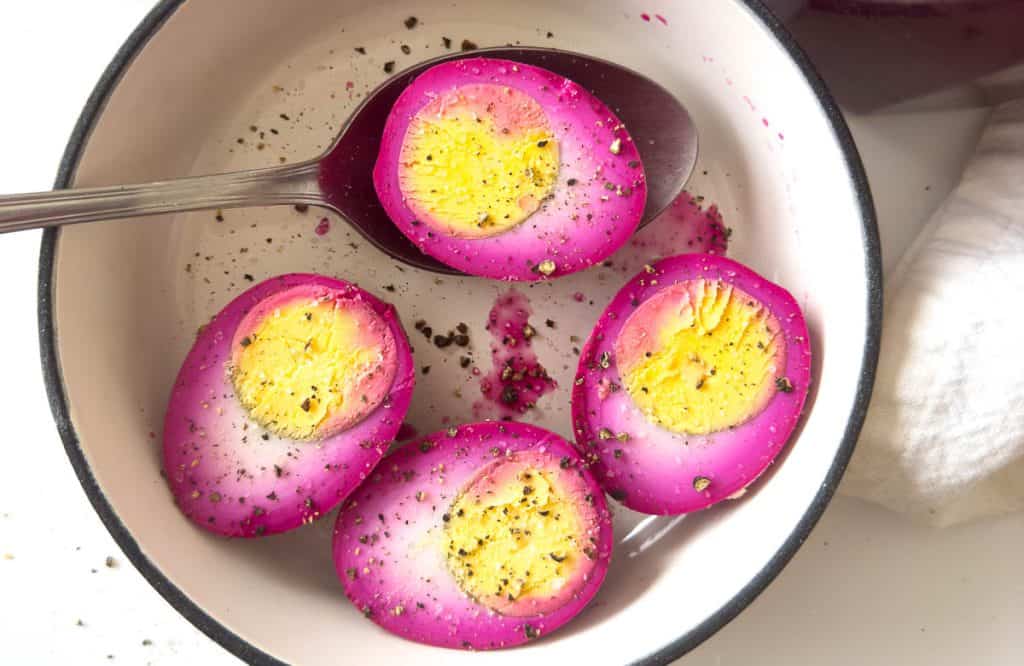
Hard boiling them is a great way to use them up. We also love pink pickled eggs they’re a great way to use up eggs and they taste amazing.
You can also make breakfast for dinner and make prefect scrambled eggs, Denver omelets, or even this breakfast frittata.
Don’t want an actual egg recipe? Try making bread pudding or a french toast breakfast casserole.
Remember When You Have A Lot Of Eggs
Eggs can go bad. And once you crack a rotten egg, and taste that smell on your tongue you will never forget it. Learn how to check for rotten eggs before cracking or cooking them.
But you CAN preserve eggs. Freeze them for when you do have time for them!
The green ring on eggs is harmless and does not affect the taste. To minimize or prevent the green ring, try these tips:
- Don’t overcook your eggs. Instead of a rolling boil, keep the water at a gentle simmer.
- Once boiled, cool the eggs in an ice bath to stop the cooking process.
Serving suggestions
Boiling eggs opens up a world of possibilities, making them super versatile and easy to use in various dishes. Here are some serving suggestions to get creative with your boiled eggs:
- Classic deviled eggs: Mash the yolks with mayo and seasonings, then fill the egg whites for a tasty appetizer.
- Egg salad: Chop boiled eggs and mix with mayo, mustard, celery and seasonings for a creamy sandwich filling or salad topping.
- Charcuterie platter: Serve boiled eggs alongside cured meats, cheeses, olives and crackers for a Mediterranean-inspired meat and cheese platter.
- Cobb salad: Add sliced boiled eggs with bacon, avocado, tomato and blue cheese over a bed of greens. Or add chopped boiled eggs to a wedge salad.
- Snacks: Sprinkle salt, pepper or your favorite seasoning over halved boiled eggs for a quick, protein-packed snack.
“I like medium-boiled eggs best for eating plain, especially warm ones. I find firmer hard-boiled eggs work best for recipes. Just an extra minute or two makes a difference in the texture of the yolk.”
— Lisa Wells, Coastal Wandering
Boiling eggs might sound simple, but nailing that perfect yolk consistency takes a bit of know-how. Remember, timing and technique are your best buddies in the kitchen. So, whether it’s for breakfast, salads or snacks, a well-boiled egg is always a win.